

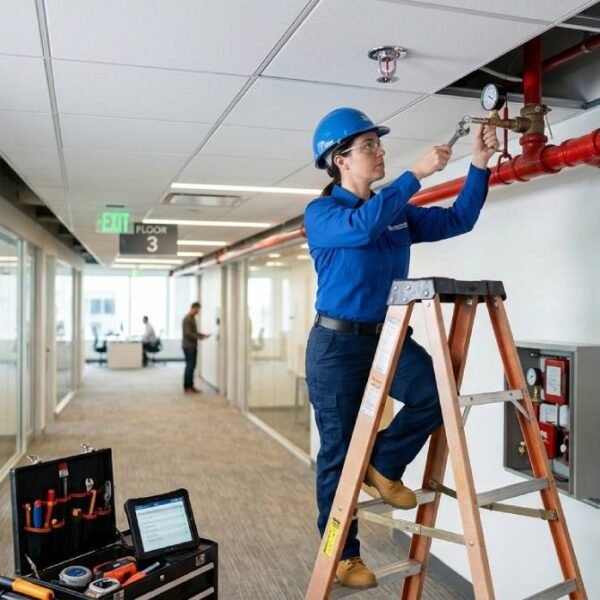
Fire safety is a fundamental responsibility for organisations managing commercial, residential and industrial properties. While fire sprinkler systems are designed to respond automatically when a fire develops, their effectiveness depends on the equipment’s condition and the availability of an adequate water supply. Regular Fire Sprinkler Servicing helps building owners and facilities managers identify potential faults, maintain system readiness and support a safer environment for occupants. By treating servicing as an ongoing part of building management, organisations can reduce the risk of preventable problems affecting their fire protection arrangements.
Why Fire Sprinkler Systems Matter for Building Safety
Fire sprinkler systems detect heat from a developing fire and discharge water through sprinkler heads that activate when they reach their set temperature. In most conventional systems, individual sprinkler heads activate in response to local heat, not all at once.
This targeted response can help control or suppress a fire in its early stages, reducing the chance of flames and heat spreading throughout a building. Sprinklers therefore provide an important layer of protection alongside fire alarms, compartmentation, emergency procedures and other safety measures.
However, even a correctly designed system requires appropriate inspection, testing and maintenance throughout its operational life.
Maintaining Reliable System Operation
A sprinkler installation contains several interconnected components, including sprinkler heads, pipework, control valves, water supplies and monitoring equipment. Depending on the installation, the system may also include pumps, tanks, and alarm interfaces.
These components must remain in good working order so the system can respond as intended. A closed valve, inadequate water supply or damaged component may compromise performance.
Regular servicing provides opportunities to check relevant equipment, identify abnormalities and arrange corrective action before a fault becomes more serious.
Identifying Problems Before an Emergency
Many sprinkler system faults are not immediately obvious during normal building use. Pipework may be concealed above ceilings, control equipment may be located in plant rooms, and components can deteriorate without producing visible symptoms.
Routine inspections can reveal issues such as leakage, corrosion, damaged sprinkler heads, unsuitable storage arrangements, or changes that affect access to essential equipment.
Early identification helps because repairs can often be planned and completed before a fire emergency puts demands on the system.
Checking Water Supply Arrangements
An adequate water supply is essential for sprinkler performance. The system must receive the water flow and pressure required by its design.
Water supply arrangements vary between properties and may involve mains connections, storage tanks, pumps or combinations of equipment. Relevant inspection and testing activities help assess whether these arrangements remain suitable.
Where problems are identified, corrective work may be necessary to restore the intended level of protection.
Protecting Sprinkler Heads and Pipework
Sprinkler heads can be affected by accidental damage, contamination, corrosion or alterations to the surrounding environment. Pipework may also experience deterioration over time.
Maintenance inspections help identify visible defects and conditions that could interfere with system performance. They also provide an opportunity to check whether storage, fittings, or changes to building layouts have obstructed sprinkler heads.
Protecting these components is particularly important in warehouses, manufacturing facilities and other environments where equipment movement or operational activity may create additional risks.
Supporting Fire Safety Responsibilities
Building owners, employers, and other responsible parties may have fire safety duties under applicable legislation and building requirements.
The precise obligations depend on the property, its use, location and fire protection arrangements. Regular sprinkler inspections and maintenance support responsible management of an installed fire protection system.
Appropriate documentation is also important because it records inspections, identified faults, maintenance activities, and corrective work.
Reducing Unexpected System Problems
A reactive approach to sprinkler maintenance can create avoidable complications. Discovering a fault during an emergency, or immediately before a planned inspection, may leave limited time to resolve it.
Planned servicing lets organisations monitor system condition and schedule maintenance more effectively. This can make repairs easier to coordinate with building operations and reduce uncertainty about the condition of essential equipment.
Although servicing cannot prevent every failure, it can reduce the likelihood of certain faults going undetected.
Supporting Occupant Confidence
People using a building generally expect essential safety systems to be maintained appropriately. Employees, residents, visitors, and contractors may not see the sprinkler installation, but they rely on broader building management arrangements to protect them.
A structured servicing programme shows that fire protection equipment receives ongoing attention. It also helps facilities teams maintain awareness of system condition and outstanding maintenance requirements.
This supports a more organised approach to building safety.
Adapting to Changes in Building Use
Buildings rarely remain unchanged throughout their operational lives. Offices may be reconfigured, warehouses may introduce higher storage arrangements, and commercial premises may change their activities.
Such changes can affect the assumptions used when a sprinkler system was originally designed. Servicing and periodic reviews provide opportunities to identify alterations that may require further specialist assessment.
Consider significant changes to occupancy, storage, layout, or fire hazards separately from routine servicing to determine whether the existing system remains appropriate.
The Importance of Maintenance Records
Accurate records help organisations understand their sprinkler systems’ maintenance history. They can document inspection dates, test results, identified defects and corrective actions.
These records help with future maintenance planning, investigating recurring problems, or reviewing an installation’s condition.
They can also support communication between building owners, facilities teams and specialist contractors, particularly when responsibility for the property changes.
Frequently Asked Questions (FAQs) About Fire Sprinkler Servicing
Why is regular fire sprinkler servicing important?
Regular servicing helps identify faults, assess equipment condition and maintain the readiness of essential sprinkler components. It supports system reliability and is part of responsible building fire safety management.
What components are checked during sprinkler servicing?
Depending on the system and required maintenance schedule, checks may cover control valves, sprinkler heads, pipework, water supplies, pumps, tanks, alarms and other relevant equipment.
Can sprinkler systems develop faults without obvious warning signs?
Yes. Some faults may remain unnoticed during everyday building use. Planned inspections and testing help identify problems that may not otherwise become apparent until the system is required.
Does sprinkler servicing replace other fire safety measures?
No. Sprinkler servicing supports one part of a wider fire safety strategy. Fire alarms, evacuation procedures, compartmentation, risk assessments and other appropriate measures remain important.
How often should fire sprinkler systems be serviced?
Servicing intervals depend on the system type, applicable standards, manufacturer instructions and site requirements. A competent specialist can establish an appropriate inspection, testing and maintenance schedule.
Conclusion
Regular fire sprinkler servicing plays an important role in maintaining building safety by helping ensure essential fire protection equipment remains in suitable working condition. Inspections, testing and planned maintenance can identify developing faults, support reliable operation and reduce the risk of avoidable system problems.
For building owners and facilities managers, servicing should be part of a wider fire safety approach rather than an isolated administrative task. Maintaining equipment, reviewing building changes, and keeping accurate records can help preserve the effectiveness of sprinkler protection throughout the property’s life.
Leave a Comment
You must be logged in to post a comment.