

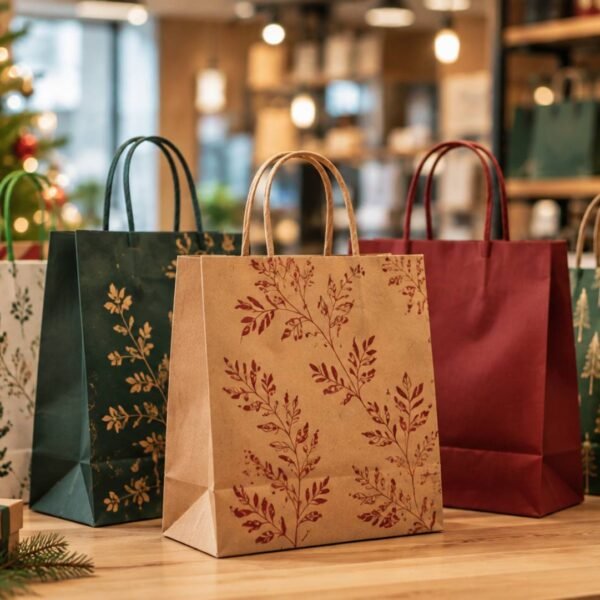
Christmas packaging rarely fails because retailers forget to order it. Problems arise when artwork approval, production, delivery and stock checks take longer than expected. A realistic schedule gives teams time to correct errors, absorb delays and replenish popular sizes before demand peaks, protecting presentation and sales during the busiest weeks.
Christmas campaigns are planned around products, promotions and delivery dates, yet packaging often receives attention too late. Bespoke bags need time for specifications, quotations, artwork checks, production and transport. A stated four-week lead time rarely means ordering exactly four weeks before the first sale. Retailers buying printed carrier bags must build in approval time, seasonal factory pressure and a safety margin for mistakes. Early planning does not require storing excessive stock for months. It means choosing formats, confirming quantities and completing artwork before annual production queues become crowded. A clear packaging calendar protects brand presentation and prevents expensive last-minute substitutions.
Lead Time Starts After Artwork Approval
Businesses often treat the date they request a quote as the beginning of production. In practice, manufacturing normally starts after the specification, artwork, price and payment terms have been confirmed.
Artwork may need changes to colours, dimensions, print areas or image quality. Each revision adds time. Slow internal approval can turn a comfortable schedule into an urgent job before production begins.
Assign one person to collect feedback and approve the final proof. Too many decision-makers can create conflicting requests and unnecessary delays.
Different Bag Types Need Different Timelines
There is no single lead time for custom packaging. Production methods, materials, quantities and finishes all influence the schedule.
Standard printed mailing and punched-handle bags may have lead times of around three to four weeks. Reel-printed twisted-handle and flat-handle paper bags can take four to six weeks. Cotton bags and short-run digital options may be available sooner.
These timings are starting points rather than guarantees for every order. Christmas demand can affect factory capacity, while custom sizes or finishes may need more time. Confirm the current delivery estimate before approving a campaign launch date.
Samples and Testing Need Their Own Window
A digital proof can show layout and colour placement, but it cannot fully demonstrate thickness, handle comfort or carrying strength. Request samples early if the bag specification is unfamiliar.
Test the bag with the actual products it will carry. Check the base, handles and opening. Confirm that gift boxes fit without stretching the sides and that heavier orders remain comfortable to hold.
Testing after the full order arrives leaves little room for correction. A sample window should sit before final approval, not after production.
Seasonal Artwork Creates More Decisions
Christmas designs may include new colours, messages, logos or decorative details. Each change can affect print setup and approval time.
The artwork should remain useful throughout the planned sales period. Avoid printing dates or short-lived offers unless the quantities have been calculated carefully. Unsold seasonal packaging can become difficult to use after Christmas.
Retailers ordering printed carrier bags should decide whether a fully festive design or a year-round branded bag with seasonal tissue paper offers better value. The answer depends on expected volume, storage space and the risk of surplus stock.
Fast-Track Production Is Not a Planning Strategy
Some packaging products may qualify for fast-track production, with delivery possible in roughly seven to ten days after artwork approval. Availability can depend on the product, quantity and production schedule.
Fast-track service can help with an unexpected shortage, but it should not replace normal planning. Rush orders may restrict material choices, sizes, finishes or quantities. They can leave little time for sample checks and artwork corrections.
Treat fast-track production as a backup option. Build the main order around the standard lead time plus a sensible buffer.
Delivery Is Only One Part of the Deadline
The delivery date should not be the day packaging is first needed. Stock must be received, counted, inspected and moved to the correct retail or fulfilment locations.
Allow time to report shortages, print faults or transport damage. Multi-site retailers need a clear distribution plan so that one location does not hold surplus stock while another runs out.
Set an internal arrival deadline at least several working days before use. Larger or more complex campaigns may need a longer inspection and distribution period.
Forecast Quantities Using More Than Last Christmas
Previous sales provide a useful starting point, but they do not account for new stores, product launches, online growth or changes in average order size.
Estimate packaging demand by bag size and sales channel. Add a controlled safety margin for damaged stock, unexpected demand and delayed replenishment. Ordering a large buffer without evidence can create avoidable waste.
Track daily use once the Christmas period begins. Early data can reveal which sizes are moving faster than expected and whether a repeat order is needed.
Build a Reverse Packaging Calendar
Start with the date the bags must reach stores or packing stations. Work backwards through inspection, delivery, production, artwork approval, sample review, quotation and product selection.
A four-to-six-week manufacturing estimate may require the project to begin eight or more weeks before use. More time may be needed for custom construction, complex artwork or large quantities.
Record each stage with an owner and deadline. A written calendar makes delays visible while there is still time to respond.
FAQs
When should Christmas packaging be ordered?
Begin planning several months before peak trading. The final order date depends on the bag type, artwork, quantity and current production capacity.
Does production begin when a quote is requested?
No. It usually begins after the specification, artwork, proof and commercial terms have been approved.
Can Christmas carrier bags arrive within ten days?
Some products may qualify for fast-track service, subject to production schedules. Confirm availability before relying on it.
Should retailers order extra seasonal bags?
A controlled safety margin can cover damage and higher demand. Excessive surplus may become unusable after Christmas.
Can samples delay an order?
They add time at the start, but they can prevent larger delays caused by ordering an unsuitable specification.
Final Takeaway
Successful Christmas packaging depends on planning each stage, not simply counting the stated production weeks. Product selection, quotation, sampling, artwork approval, manufacturing, transport and inspection all need space in the calendar. Seasonal demand can place extra pressure on production schedules, making late changes harder to manage.
Retailers should choose bag formats early, test them with actual products and approve artwork through one responsible contact. The final delivery should arrive before packaging is needed, leaving time for counting, quality checks and distribution. Stock use should then be monitored throughout the peak period.
Fast-track services can help in some circumstances, but they should remain a backup rather than the main plan. By working backwards from the first selling date and allowing a realistic safety margin, retailers can receive the right quantities, sizes
Leave a Comment
You must be logged in to post a comment.