

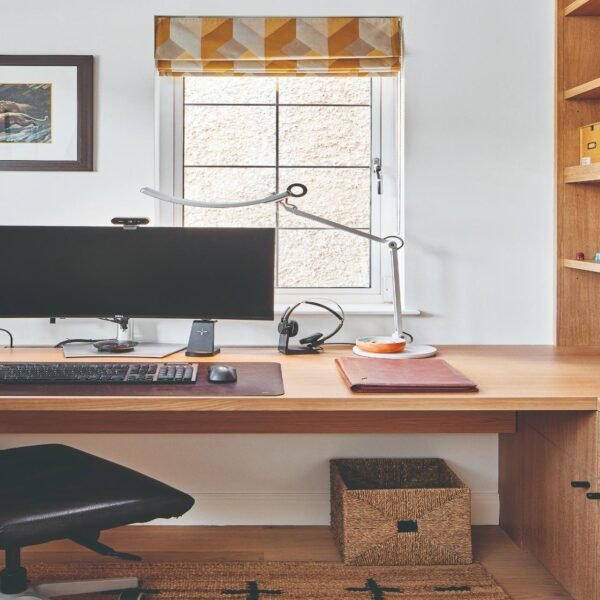
Remote and hybrid working have reshaped how small homes across the UK are used. Spare bedrooms, box rooms, and even corners of living areas now function as full-time workspaces. In these compact environments, furniture choices matter more than ever. Among them, the home office chair plays a central role in comfort, posture, and long-term wellbeing.
A poorly chosen chair can quickly lead to back pain, stiffness, and fatigue, particularly when space limits movement and flexibility. By contrast, a well-designed chair that focuses on ergonomics, adjustability, and proportion can support healthy working habits without overwhelming a small room. This article outlines practical, evidence-based advice to help you choose wisely.
Why Seating Quality Is Crucial in Small Home Offices
Small home offices often lack the flexibility of larger workplaces. There is usually limited room to stretch, stand, or reposition furniture. As a result, the body remains seated for longer periods, increasing pressure on the spine, hips, and shoulders.
An ergonomically considered chair supports natural posture and encourages subtle movement throughout the day. This is particularly important in compact settings where posture errors tend to go unnoticed until discomfort develops. The goal is not luxury or visual impact, but functional support that works quietly in the background.
Understanding Ergonomics Without the Jargon
Ergonomics is often misunderstood as something complex or technical. In reality, it simply means designing furniture to work with the body rather than against it.
A well-engineered home office chair, such as those designed with adjustability, breathable materials, and supportive frames in mind by Slouch, focuses on how people actually sit, move, and work over long periods. This approach prioritises spinal alignment, pressure distribution, and comfort consistency rather than short-term softness or appearance.
Key Chair Features That Matter Most in Limited Spaces
Correct Seat Height and Depth
Seat height should allow feet to rest flat on the floor while keeping knees level with or slightly below the hips. This reduces pressure on the thighs and improves circulation. Seat depth is equally important. A seat that is too deep forces smaller users to slouch, while one that is too shallow offers poor support.
In small home offices, correct sizing is essential because there is less opportunity to adjust posture by moving around the room.
Lumbar Support for Long Sitting Hours
Lower back support helps maintain the natural inward curve of the spine. Chairs with adjustable lumbar support allow users to fine-tune this support based on height and sitting style. Without it, the lower back tends to collapse inward, leading to fatigue and discomfort.
In compact workspaces where prolonged sitting is common, lumbar support becomes a necessity rather than an optional feature.
Backrest Flexibility and Tilt Control
A rigid sitting position places constant pressure on the spine. Chairs that allow gentle reclining or backrest movement help reduce this pressure by encouraging small posture changes.
Tilt mechanisms with tension control are particularly useful in small offices, as they allow movement without requiring extra floor space. This promotes circulation while keeping the workspace compact and tidy.
Arm Support Without Taking Over the Room
Armrests can be beneficial, but only when they are adjustable. Fixed armrests often prevent chairs from fitting neatly under desks, which is a common issue in small home offices.
Height-adjustable or width-adjustable arms help support the forearms during typing and reduce shoulder tension, while still allowing the chair to be tucked away when not in use.
Choosing Materials That Suit Small UK Homes
Breathable Backs for Comfort
Mesh or ventilated backrests help regulate temperature, especially in smaller rooms where airflow may be limited. Breathable materials reduce heat build-up and make long working sessions more comfortable without adding bulk.
Slim Profiles Over Heavy Padding
Large cushions and thick frames can overwhelm a small room both visually and physically. Chairs with clean lines, slim backs, and well-engineered support systems provide comfort without dominating the space.
Making the Chair Work With the Rest of Your Setup
Desk and Chair Alignment
The relationship between chair and desk height is critical. When seated, elbows should rest close to the body and form an angle of roughly 90 degrees. Wrists should remain neutral when typing, avoiding upward or downward strain.
In small offices, where desks are often fixed or multi-purpose, the chair’s adjustability becomes even more important.
Floor Type and Movement
Casters should match your flooring. Hard floors benefit from softer wheels that prevent slipping, while carpets require firmer casters for smooth movement. Easy movement reduces strain when repositioning, especially in tight spaces.
Practical Buying Advice for Small Home Offices
Before committing to a chair, consider the following:
- Sit in the chair for at least ten minutes to assess real comfort
- Check that all adjustments can be made while seated
- Ensure the chair fits fully under your desk when not in use
- Prioritise structural support over visual features
These considerations help ensure the chair supports daily work rather than becoming a source of discomfort.
Long-Term Health and Productivity Benefits
The right chair does more than improve comfort. It supports concentration, reduces physical fatigue, and helps maintain consistent productivity. Over time, proper seating can reduce the risk of back pain and posture-related issues that often develop quietly in home working environments.
In smaller homes, where work and personal life overlap closely, this balance becomes especially important.
Conclusion
Small UK home offices demand thoughtful furniture choices. Space constraints make comfort and ergonomics more important, not less. A carefully selected home office chair, designed around posture, adjustability, and efficient use of space, can significantly improve daily working life.
By focusing on fit, support, and proportion rather than appearance alone, you can create a workspace that supports both health and productivity — even in the smallest room.
Leave a Comment
You must be logged in to post a comment.