

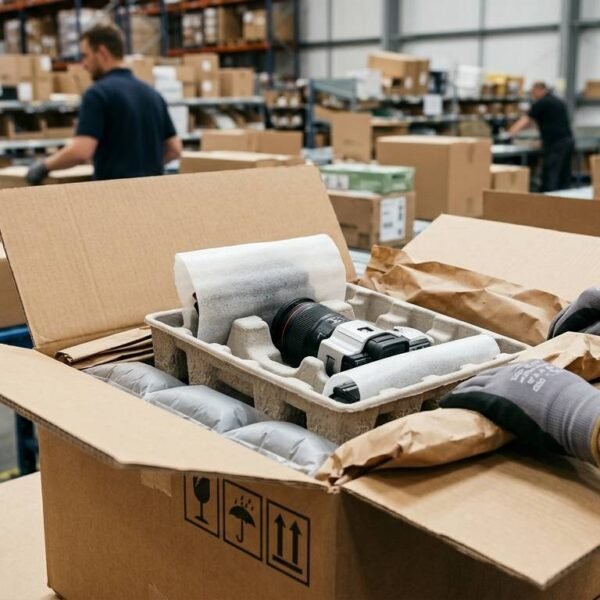
Moving products from one location to another involves more than simply placing an item inside a box. During transit, packages may be handled several times, stacked with other goods, moved between vehicles, and exposed to temperature or humidity changes. Tuplin provides specialist packaging solutions designed to help businesses protect products throughout these stages of transportation. Without suitable protection, even a well-made product can arrive scratched, cracked, dented, or otherwise damaged.
Understanding the Risks of Transit
Products can experience a range of physical stresses during transport. Packages may be dropped, knocked against other items, or subjected to vibration during road, rail, air, or sea journeys. Heavy items placed on top of lighter packages can also create pressure that ordinary packaging may struggle to withstand.
Risk varies considerably depending on what is being transported. Fragile glassware, delicate electronics, machinery components, and unusually shaped products all require different forms of protection. A standard-sized box may not provide enough support, especially when there is excessive space or the packaging does not adequately cushion the contents.
Specialist packaging begins by considering these risks rather than treating every product in the same way.
Packaging Designed Around the Product
One key advantage of specialist packaging is that it can be selected or designed to match the dimensions, weight, and characteristics of the item being shipped.
A close-fitting package can help limit unnecessary movement inside the container. This matters because an item that repeatedly shifts during transit may be more vulnerable to impact, abrasion, or pressure. Internal supports, protective inserts, and cushioning materials can add stability where needed.
For irregularly shaped or particularly delicate products, conventional packaging may leave vulnerable areas exposed. Specialist solutions can provide a more appropriate fit, helping distribute forces and keep the product securely positioned throughout its journey.
Improving Protection Against Impact
Impact is one of the most common causes of damage during transportation. Even when a package appears intact from the outside, a sudden knock or fall can transfer force to the contents.
Protective packaging materials can help absorb or distribute some of this force. Depending on the product, this might involve cushioning, moulded inserts, reinforced containers, or other protective components.
The objective is not simply to make a package larger or heavier. Effective packaging considers where protection is needed and how the product is likely to respond to different impacts.
Reducing Movement Inside the Package
Internal movement can also contribute to damage. When products can move freely inside a box, they can collide with the packaging or other items packed alongside them.
Appropriate internal protection can help keep contents in position. This is particularly useful when shipping several components together or when an item has delicate surfaces that could be scratched through repeated contact.
A well-considered packaging solution can therefore provide both cushioning and stability, rather than relying solely on the outer container’s strength.
Protecting Products During Handling and Storage
Transit involves more than the journey between two destinations. Packages may spend time in warehouses, loading areas, distribution centers, and delivery vehicles before reaching the customer or final recipient.
Specialist packaging can account for these stages. Stronger outer materials, suitable closures, and reinforced areas can help a package cope with repeated handling. Clear labeling and appropriate packaging formats may also support safer handling where specific requirements apply.
Considering the entire journey helps ensure packaging remains practical and protective from dispatch through final delivery.
Balancing Protection, Cost, and Practicality
More packaging does not automatically mean better packaging. Excess material can increase a shipment’s size and weight, potentially making transportation and storage less efficient.
The aim is to find a suitable balance between protection and practicality. Packaging should provide enough resistance to the expected conditions without creating unnecessary bulk. Product dimensions, weight, fragility, and transportation method all shape that balance.
Specialist packaging helps businesses consider these factors rather than relying on a one-size-fits-all approach.
Conclusion
Damage during transit can create costs beyond the value of the damaged item. Replacements, returns, delays, and additional handling can all affect a business and its customers. Appropriate packaging cannot eliminate every transportation risk, but it can reduce vulnerabilities within the sender’s control.
By choosing packaging that reflects the product and the conditions it is likely to face, businesses can create a more secure journey from dispatch to delivery. Specialist packaging is ultimately about more than wrapping a product; it is about giving the item the right level of protection for the journey ahead.
Leave a Comment
You must be logged in to post a comment.